Cams: two laws, the same lift
Compare a cycloidal rise with a 3-4-5 polynomial. Change lift, angle and speed, and explore why lower acceleration does not settle the choice.
Open notebook and compare curves →Gears, transmissions and cams explained through equations, diagrams and worked examples. A path from the mechanism on paper to a simulation in your browser.
Notebooks with explicit assumptions, equations, calculation activities and explained answers. Text, figures and examples remain available without JavaScript.
Compare a cycloidal rise with a 3-4-5 polynomial. Change lift, angle and speed, and explore why lower acceleration does not settle the choice.
Open notebook and compare curves →Solve three configurations of the same assembly. Then enter two speeds and check carrier speed and the tooth geometry condition.
Open notebook and check speeds →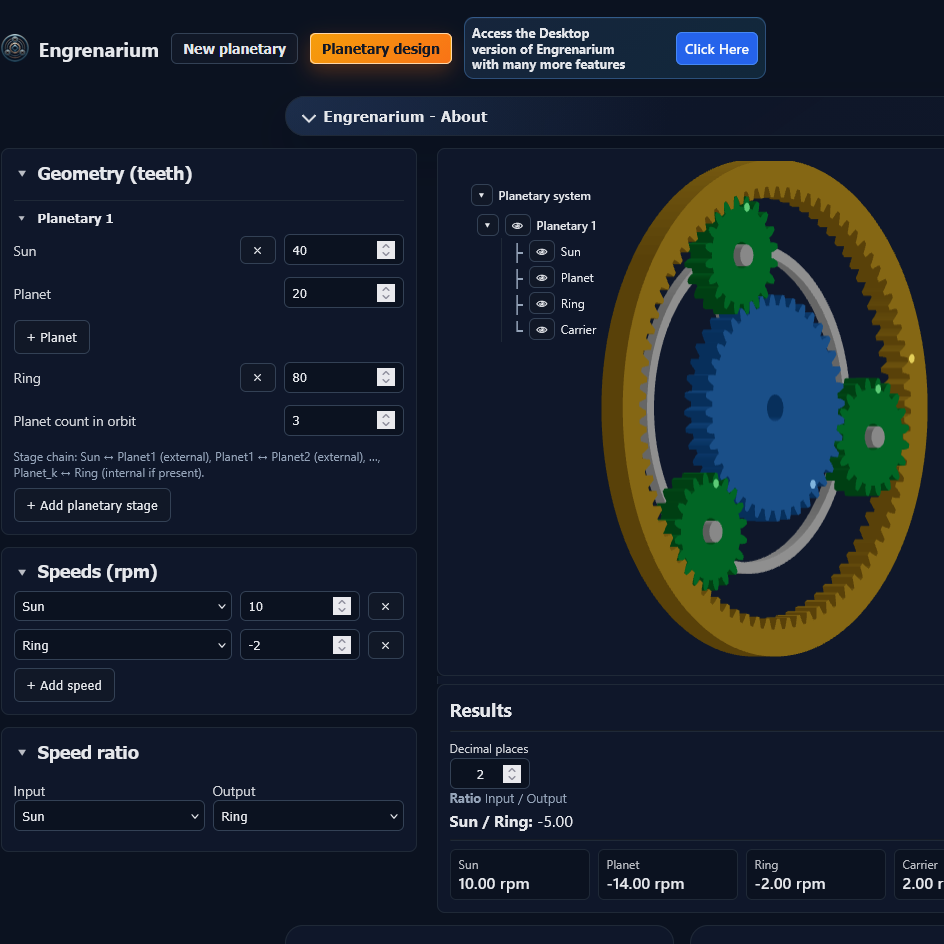
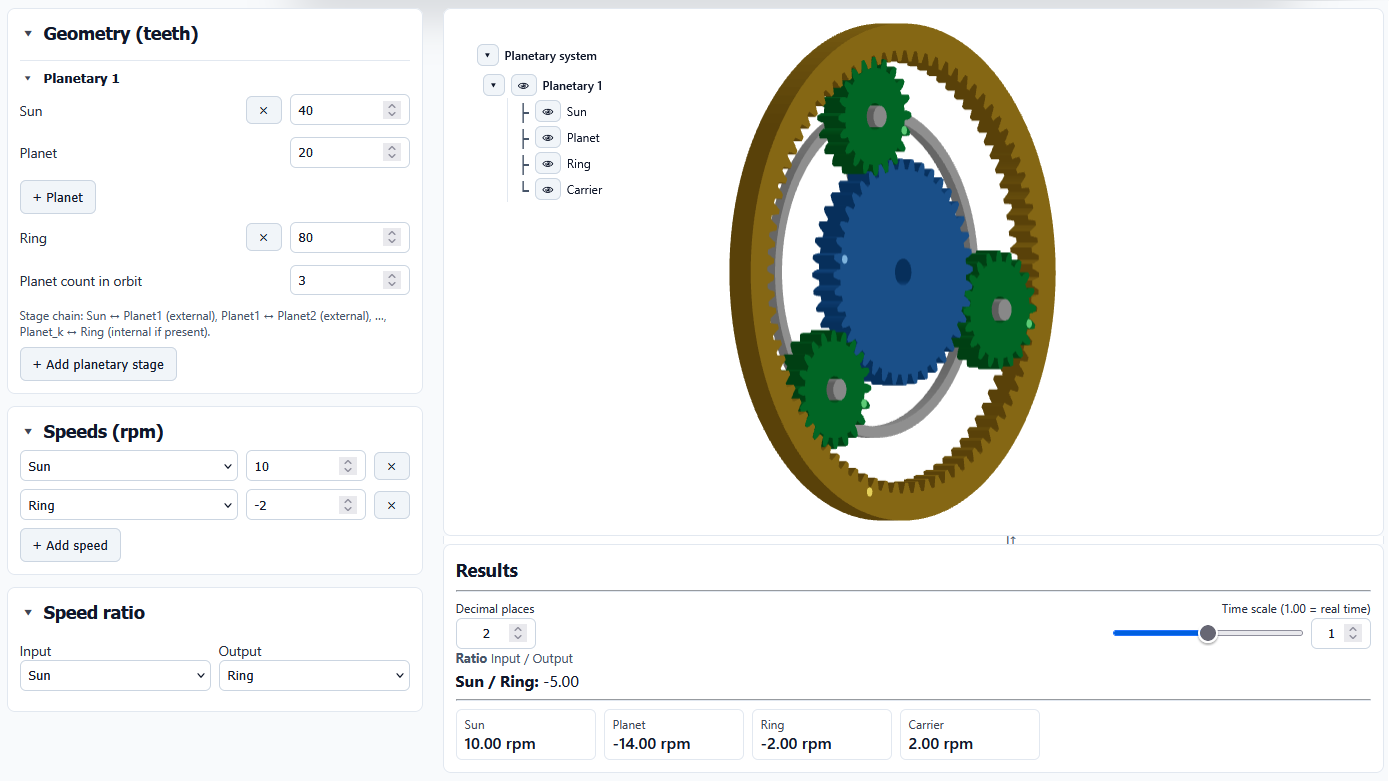
Investigate planetary gear speeds. Compare what happens when the ring, sun or carrier is fixed.
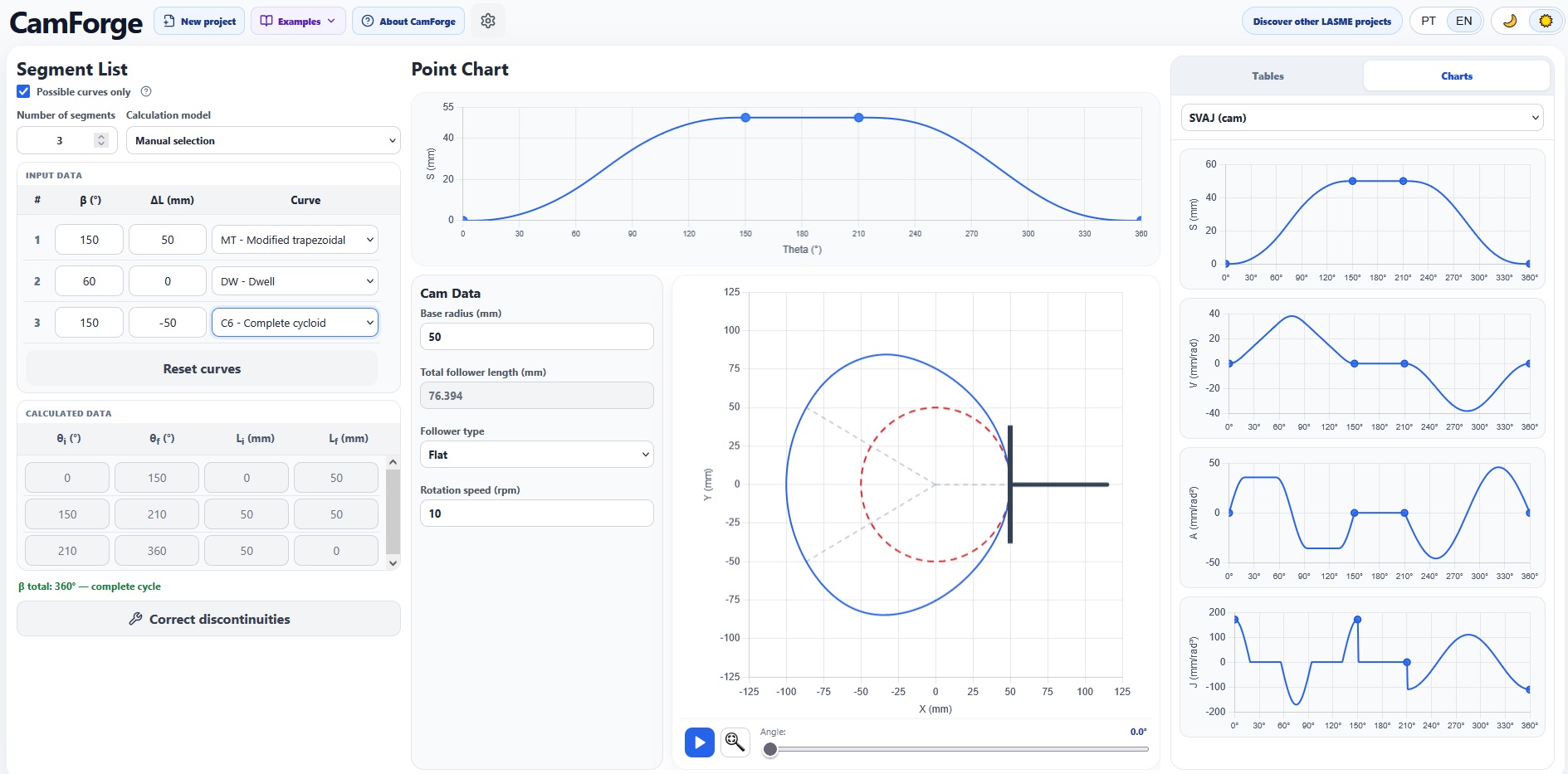
Explore motion laws and cam profiles. Use SVAJ diagrams to investigate continuity between segments.
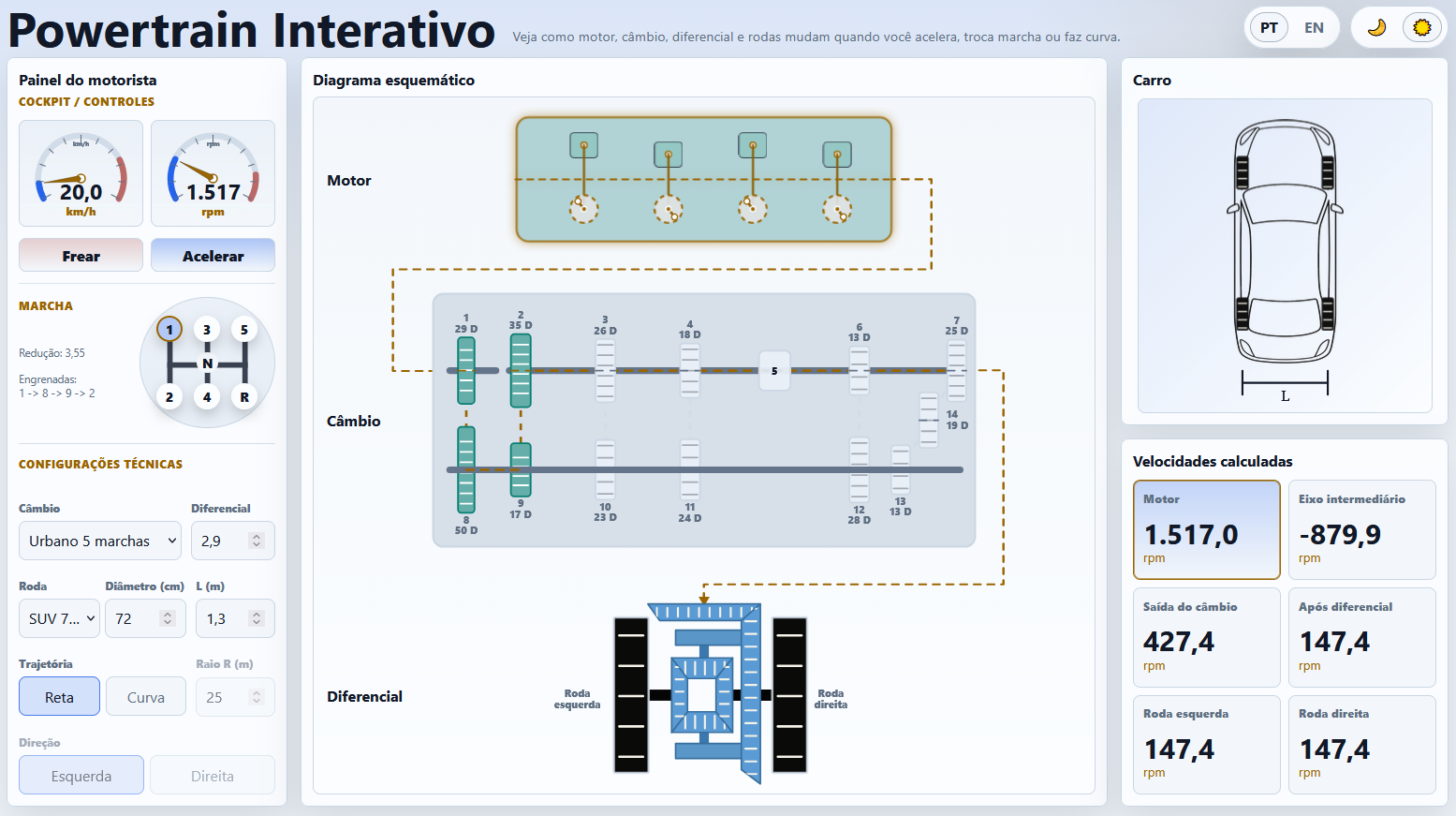
Follow engine rotation all the way to the wheels. Connect gear selection, differential action and vehicle speed on straights and turns.
How teeth, shared shafts and mesh types determine speed and direction.
Learn to use speeds relative to the carrier before analysing multistage assemblies.
Connect the displacement specification to velocity, acceleration and profile geometry.
A 24-tooth sun and a 72-tooth ring. Fixing a different member changes the result — and the direction of rotation.
Follow the calculation and check the results →1 200 → 300 rpm
Fixed ring, sun input and carrier output: a 4:1 reduction. The guide compares this result with a fixed sun and a fixed carrier, and shows how to detect sign errors.
Compare displacement, velocity, acceleration and jerk for a 30 mm rise. Change the inputs, check the equations and solve exercises.
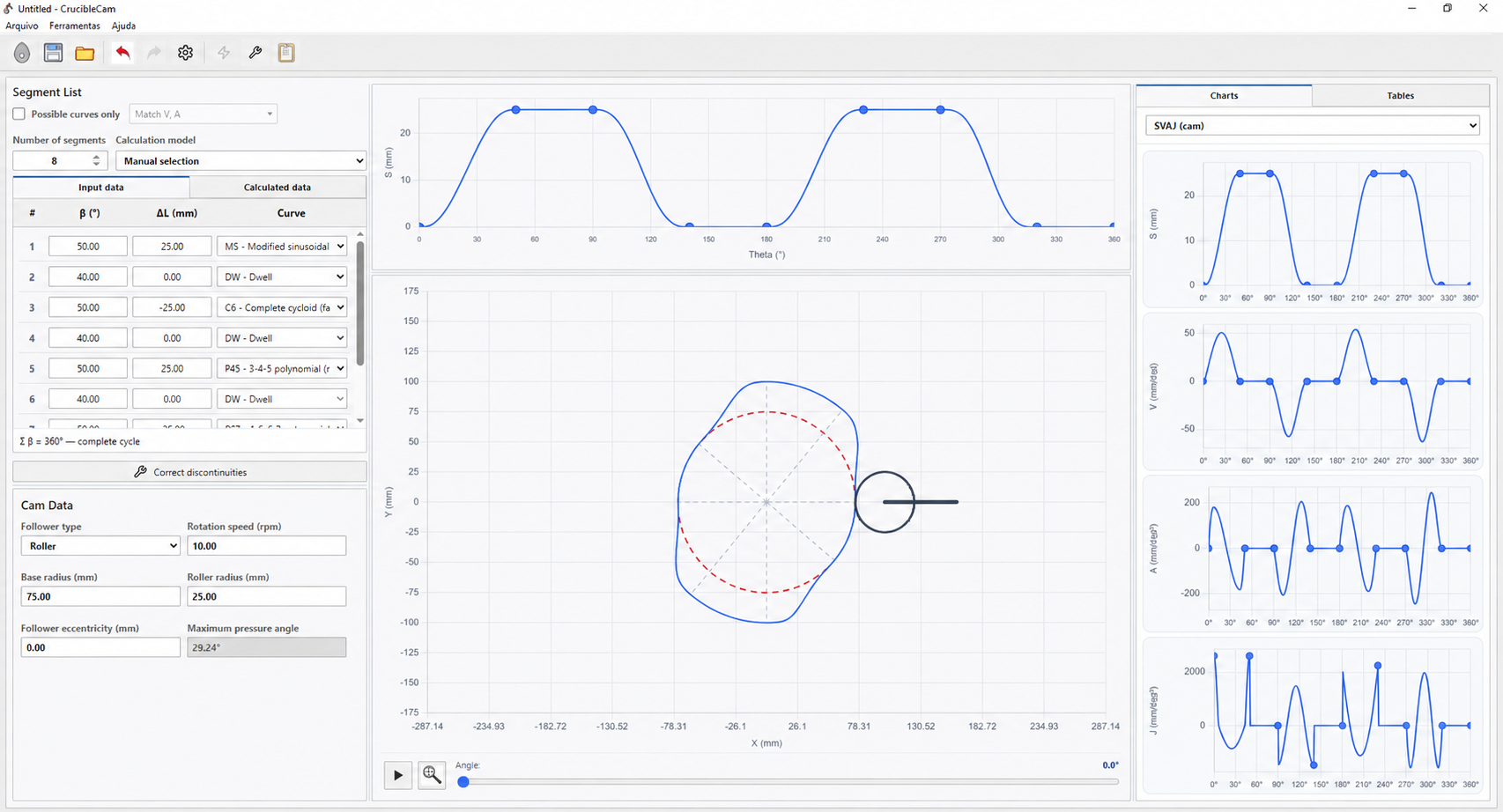
Discover CrucibleCam 1.5.0 for Windows: cam design, SVAJ analysis, automatic search, discontinuity correction and the features unlocked by PRO.
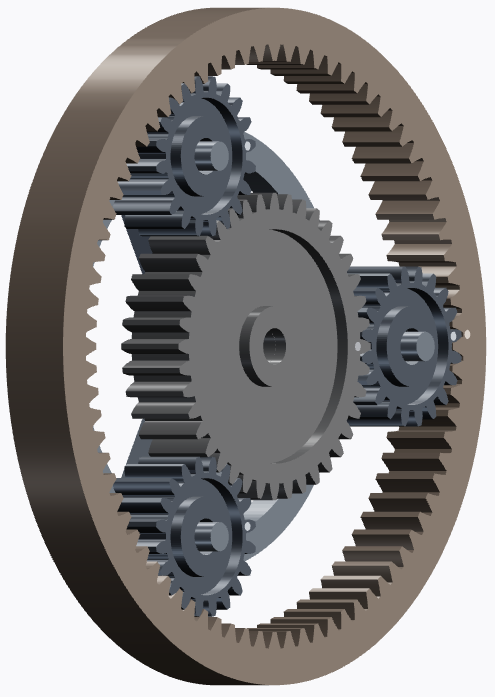
A 24-tooth sun and 72-tooth ring: calculate three configurations, check signs and solve an exercise with two inputs.
Short answers about the portal's teaching tools and the mechanical concepts explored in the articles.
Engrenarium is a planetary gears web simulator with educational and technical purposes. It helps visualize epicyclic arrangements and discuss kinematic relationships between input, output, and carrier.
There is a web version and a full version for Windows. The web version allows you to quickly learn about the resource; the desktop version can be used when you want to work with the tool outside of the browser.
CrucibleCam is a browser-based cam design tool. It assembles motion segments, generates the cam profile and lets you inspect displacement, velocity, acceleration and jerk diagrams, as well as pressure angle and curvature.
There is no single best curve. The choice depends on the required rise or return, available cam angle, rotation speed and the acceptable velocity, acceleration and jerk. Continuity at the junctions between segments must also be checked.
The correction can redistribute the angular interval β or the displacement variation ΔL of the segments to make boundary conditions compatible. The designer must still verify whether the resulting motion, pressure angle and curvature are appropriate for the mechanism.
No. In addition to the simulator, there are articles on gears, compound trains, differentials, cams and motion curves. Engrenarium complements these texts when visualizing a planetary gear train helps you understand the calculation.
The material was organized for students, teachers and professionals who need clear explanations about mechanisms, gears and teaching support resources in mechanical engineering.
Use the email available in the contact section or on the page About for questions about the technical content, tools or institutional context of the portal.
Objective definitions of frequent terms in the study of gears, transmissions and mechanisms.
The books below bring together classic mechanisms, devices and movement solutions. They speak to the site's themes because they show how pairs of gears, cams, levers, and transmissions appear in real-world applications.
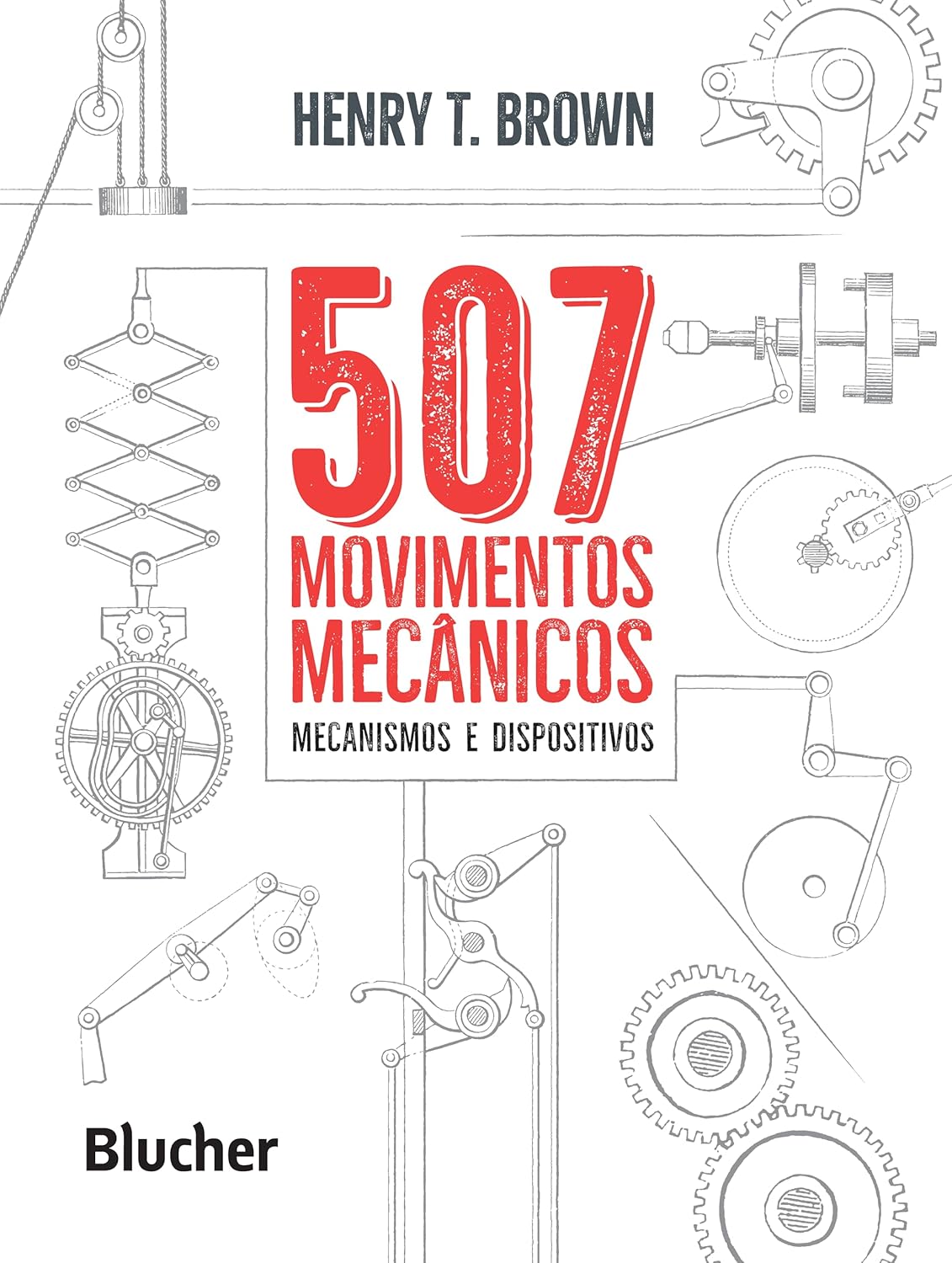
Translated edition with illustrated mechanisms and descriptions of operation in various applications, useful as reference material for students and those interested in movement synthesis.
Blucher Publisher, 2019
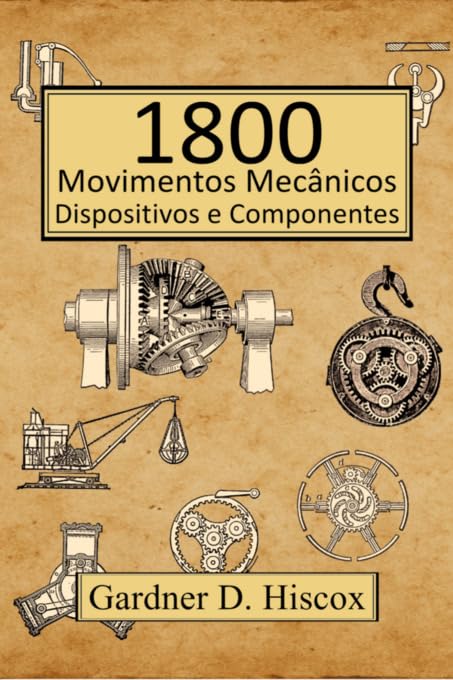
Translated reference work with a wide variety of mechanisms, devices and classic mechanical solutions, useful for consulting alternative transmission, guidance, control, and motion conversion.
Barbudenge, 2025